Science, Education and Culture
National Song and Dance Academy
To study, teach, and popularize national dances and songs
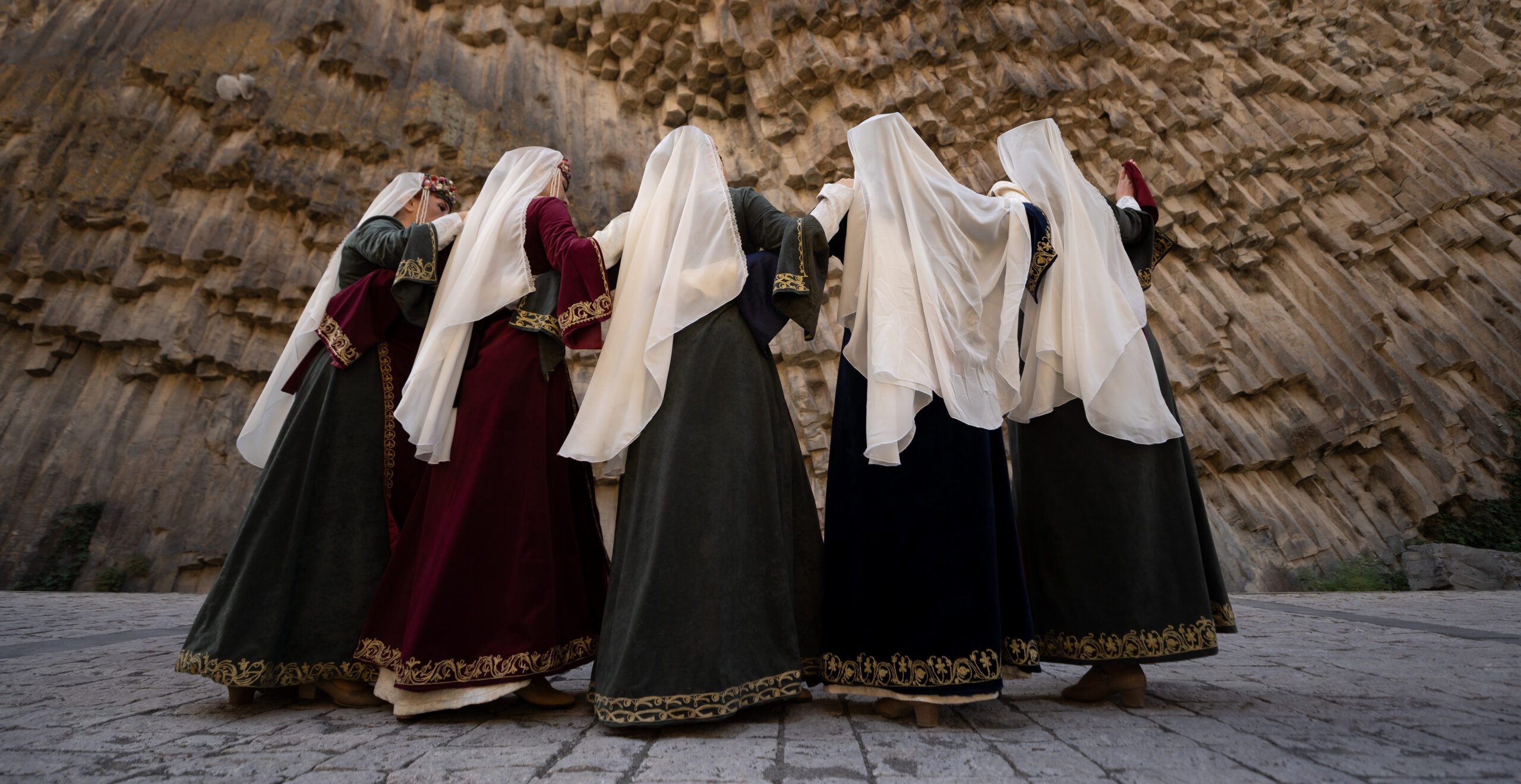
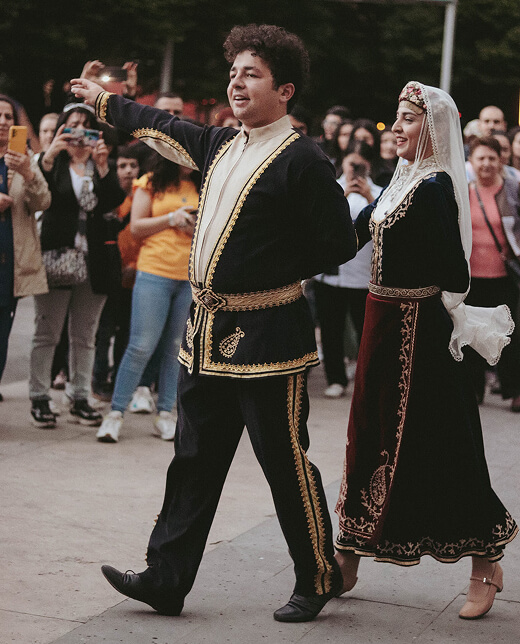
Renowned Armenian dance expert, founder of the “Karin” Traditional Song and Dance Ensemble, Honored Art Worker of Armenia Gagik Ginosyan believed that traditional culture must be taught to children from an early age.
he “National Song and Dance” subject he authored was first piloted at the Ayb School in 2011. It became clear that traditional song and dance have a unifying nature and can energize students with new vitality. Moreover, they spark children’s interest toward their own country’s culture and history, helping to awaken national identity.
Yerevan
Shirak
Tavush
Lori
Vayots Dzor
Artashat
Armavir
Aragatsotn
Kotayq
Gegharquniq
Artsvashen
Syuniq
Hadrut
Martuni
Askeran
Shushi
Berdzor
Martakert
Shahumyan
Qarvachar
Teacher:
Student:
School
Explore the number of schools, where students learn folk dances and songs.
Dance in schools
Scientific Karin
CREATION OF KINETOGRAPGHY
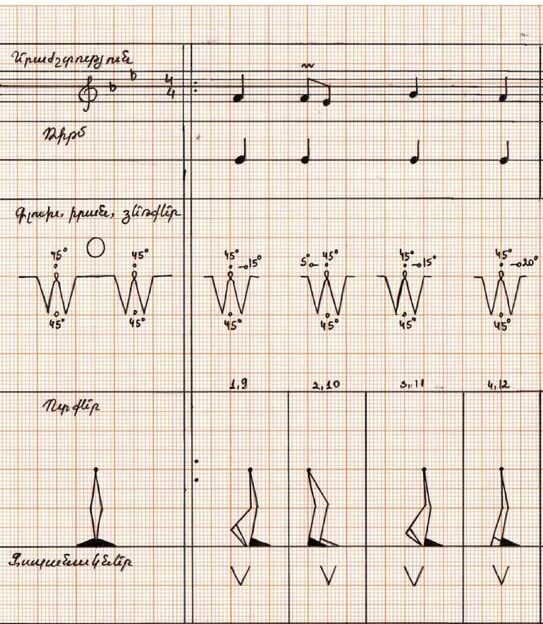
The staff of the “Karin” Scientific Center continue the tradition of accurate dance notation founded by S. Lisitsian within the “Kakavagir” project. Speaking about Srbuhi Lisitsian, Gagik Ginosyan would say: “In Moscow she was called the Armenian Isadora Duncan, the Komitas of Armenian dance; we call her the neume-writer of Armenian dance.” She is the strongest pillar of Armenian dance studies, around which the future must also be built. The project is based on S. Lisitsian’s “Kinetography” movement notation system—the only one of its kind in the Soviet and post-Soviet space.
The Military Dance – A POWERFUL FORCE
Military song and dance have always uplifted the spirit of the people and the army. In the past, performing war dances was considered highly important and regarded as one of the best methods of military-physical training. By overcoming their technical challenges, boys and young men became even more tempered and strengthened. Additionally, before battle, the dances boosted the soldier’s fighting spirit, united their will, and instilled a sense of invincibility.
And nothing shall defeat that ancient people