Accurately record, transmit, and disseminate traditional dances
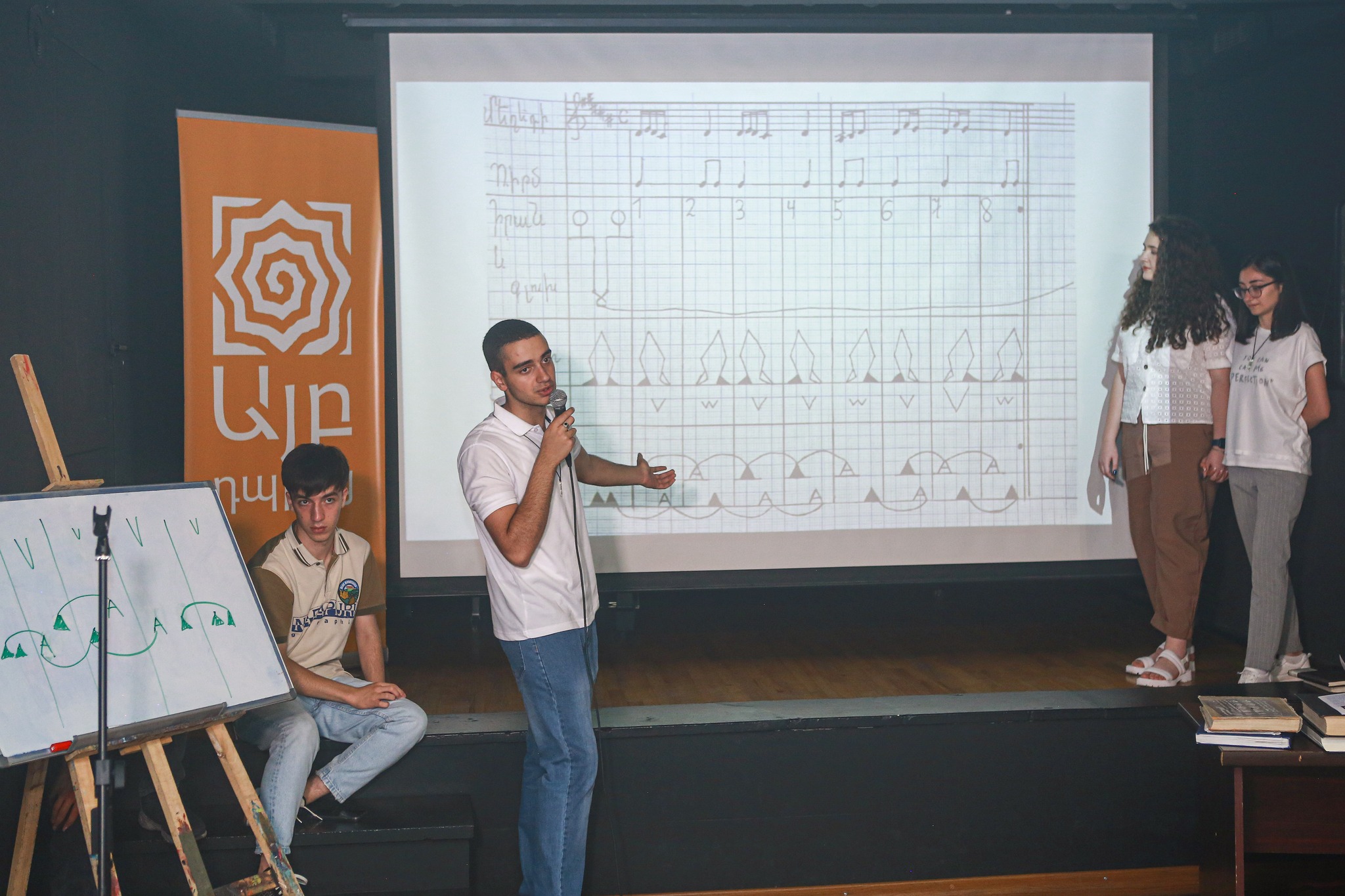
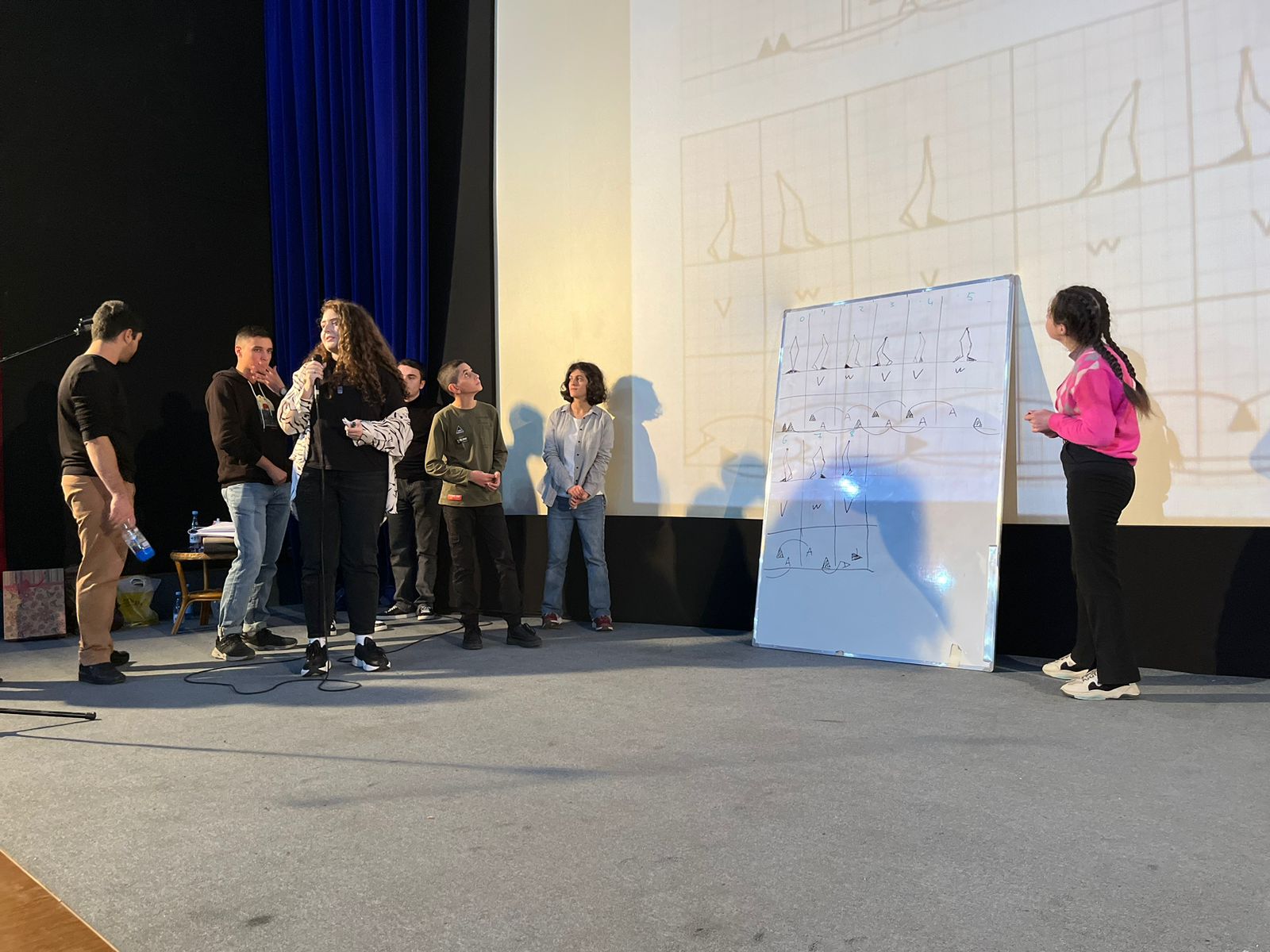
KINETOGRAPHY
It is evident that among all branches of culture, dance art is the least studied, and it is equally evident that it is one of the oldest arts—one that cradled the childhood of humanity and has had an enormous influence both on the entire course of human development and on the evolution and formation of other cultural fields.
Thanks to centuries of folkloric collection work, enormous amounts of material have been documented and preserved in the realms of folk culture, folklore, and musical art. But the picture is entirely different in dance art and other movement-based art forms: these have mainly survived through visual arts, sculpture, descriptive literature, musical and ethnographic recordings—none of which can fully convey the charm of the movement, let alone its precision.
Wishing to pass Armenian dances on to future generations, Komitas documented and described eight dances, then decided to stop until a more perfect system for dance notation would be created. The earliest attempts at dance notation—from the 15th-century attempt by Margarita of Austria to the 20th-century systems of Rudolf von Laban and Antonine Meunier—were incomplete and did not allow for fully accurate and comprehensive recording of dance movements.
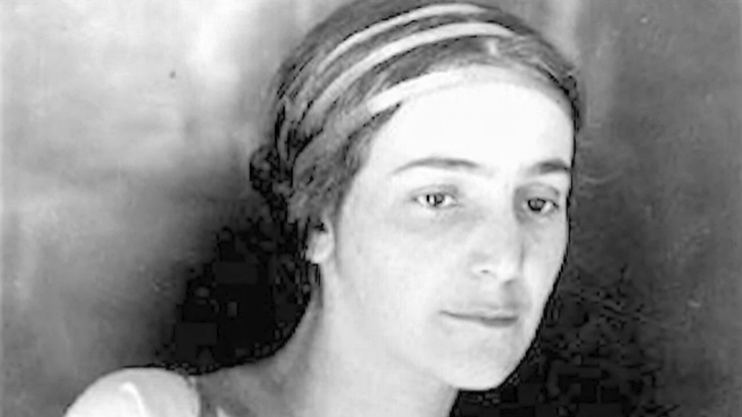
Finally, taking into account all these notation systems—their shortcomings and their achievements—as well as more than two decades of extensive dance-collecting experience, the founder of Armenian ethnodance studies, Srvuysh Lisitsian, published her book “Movement Notation (Kinetography)” in 1940. The system presented in it remains to this day the only such system in the entire post-Soviet space and is arguably the most flawless and most complete among them.



creator of movement graphing system
Srbuhi Lisitsyan
Despite conducting enormous folkloric research, Srvuysh Lisitsian managed to publish only two dances using her own system: “Shoror” (in Ancient Dances and Theatrical Representations of the Armenian People, vol. 1, 1958) and “Lachi Bana” (same work, vol. 2, 1972).
It is evident that Lisitsian’s work “Movement Notation (Kinetography)” (1940), which had gathered dust on shelves for decades, not only needed to return to Armenian dance studies, but first had to reclaim its Armenian name and become the driving force that would restore the crystalline character of Armenian dance—distorted by Soviet deviation—endowing it with scientific precision. It would become a powerful armor carrying the ancient and future-facing prophecies of our culture and returning Armenian national identity to itself, thus making Armenian dance art unassailable.
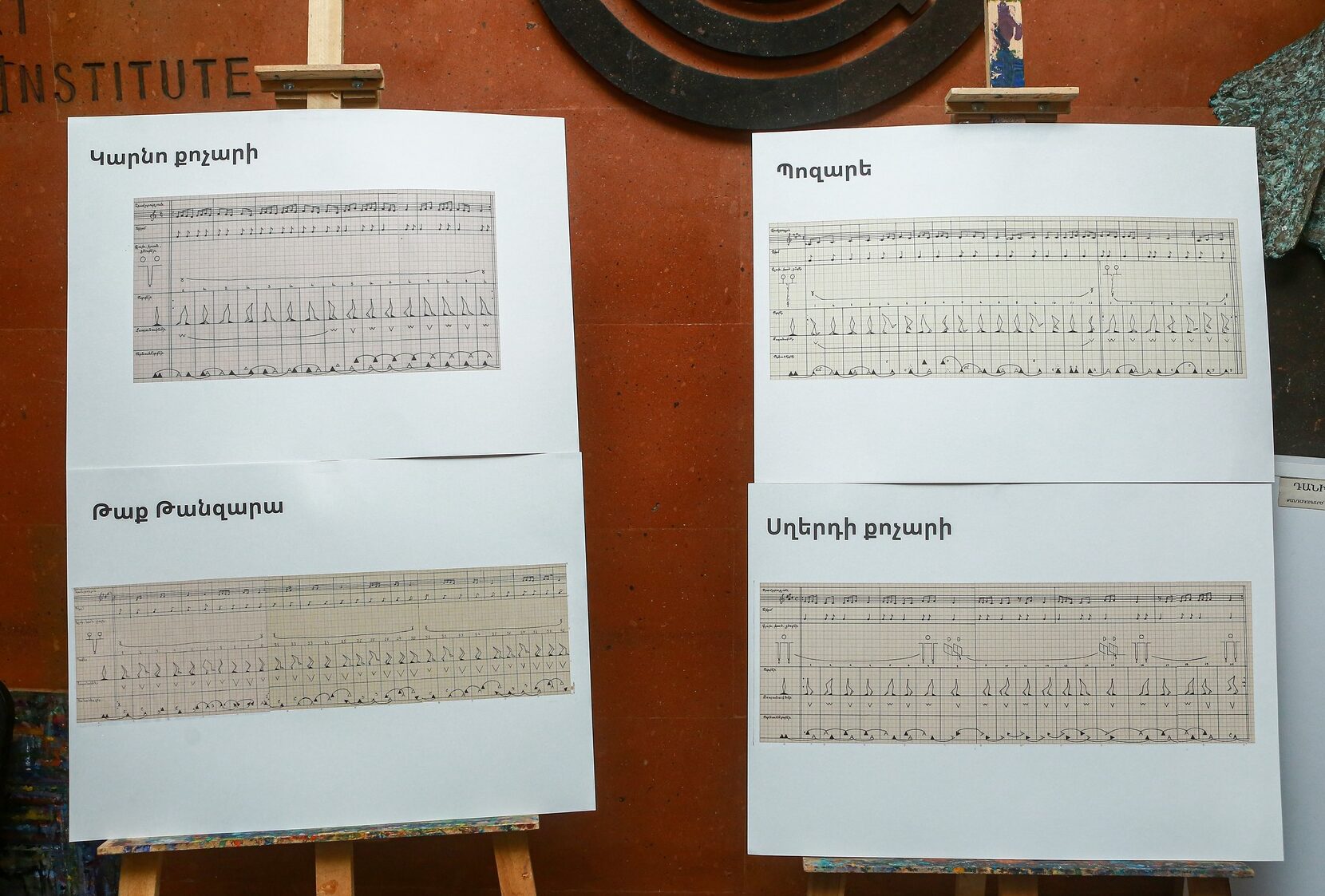
«Kakavagir»
Based on the Classical Armenian word “kakavel,” meaning “to dance” and serving as a synonym for “parel,” the project name “Kakavagir” was created. During the dance-notation process, which lasted months, it became evident that dance notation and a scientific approach to dance serve as the roots of the tree we call Armenian dance. Without deep and powerful roots, it would be impossible not only for the tree to bear fruit, but even to keep its trunk standing and ensure its longevity.