Karin Scientific Center

Science ensures the continuous life of culture.

bird

Establishment

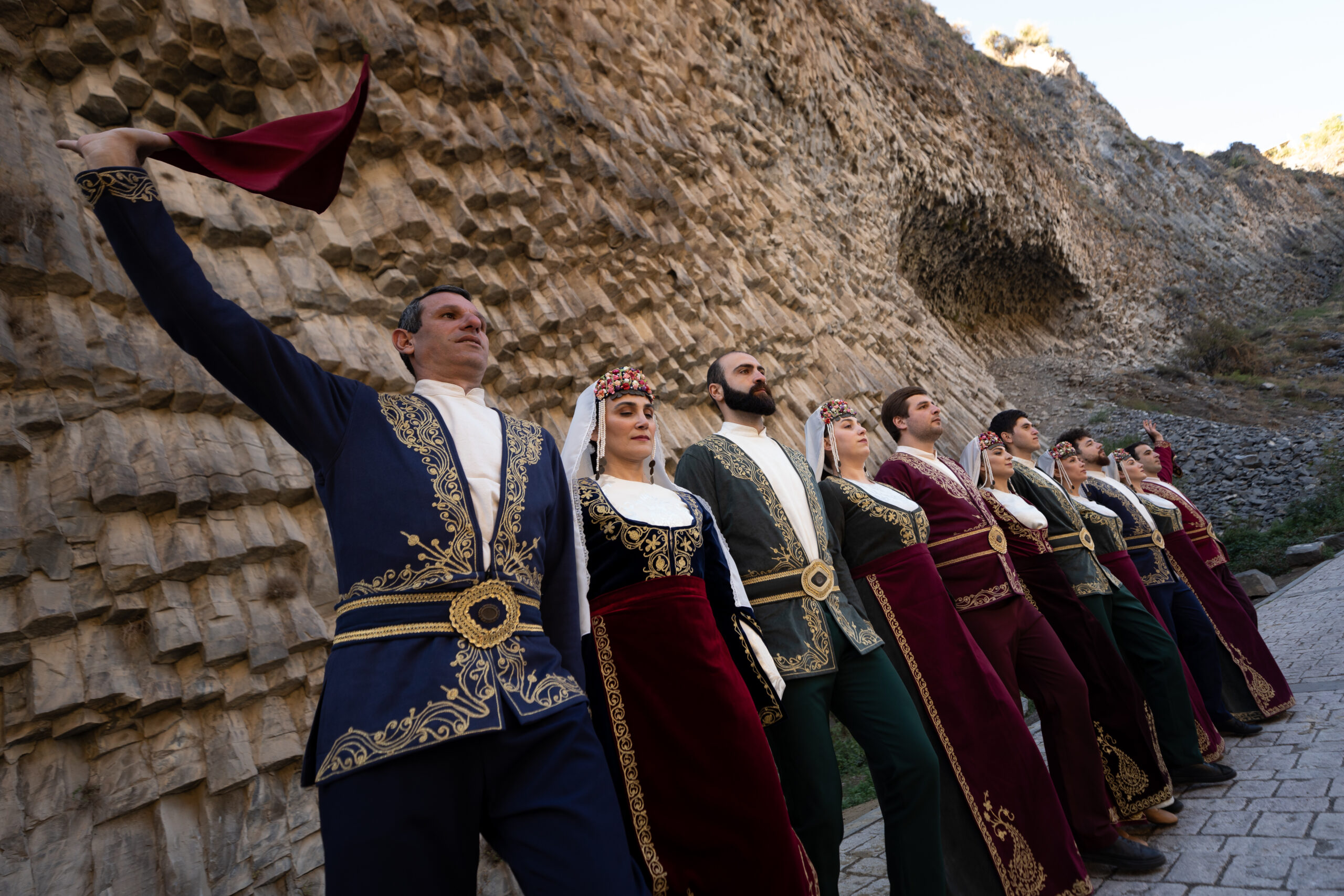
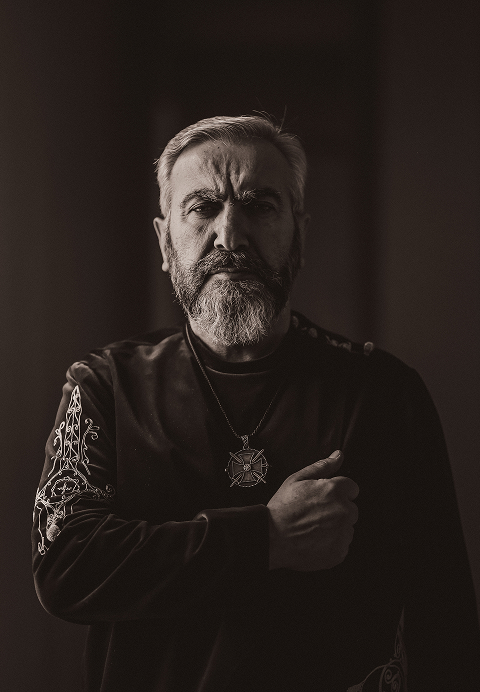
The Karin Scientific Center for the Study and Research of Armenian Traditional Culture was founded in 2018, on the initiative and under the leadership of renowned dance ethnographer, folklorist, founder and director of the Karin folk song and dance ensemble, Honored Worker of Culture of Armenia, Gagik Ginosyan.


Based on the results of many years of research, fieldwork, and other dance-scholarship activities, G. Ginosyan came to the conclusion that it was necessary to create what can be considered a unique institution in the field—one that would not only continue performing the aforementioned work at a higher level, but would also take upon itself the mission of properly preserving and disseminating Armenian traditional culture, as well as the highly responsible task of restoring previously recorded ethnographic materials and conducting new studies.

Dance is a science

Slider images

The foundation of the center is based on the fundamental dance studies of the great ethnographer and folklorist Srbouhi Lisitsian—founder of Armenian ethnochoreology, author of the USSR’s only movement-recording system Kinetography, Honored Worker of Science—and the works of her students Zhenya Khachatryan and Emma Petrosyan. The works of other past and present ethnographers and folklorists also play an important role.


Bearing the Value of Millennia

An Archive

It should also be noted that the basis of the Center’s work is the vast archive accumulated through years of fieldwork by Gagik Ginosyan. This archive contains a large collection of video and audio recordings, including both previously known and newly discovered Armenian traditional songs, dances, ritual songs, ceremonies, and other cultural expressions.

Additionally, the archive includes a large library and ethnographic items found or acquired during field expeditions across Armenia, Artsakh, various European cities, Russia, the United States, Lebanon, and beyond.

“Dance expresses the defining traits of each nation—especially its customs and level of civilization.” — Komitas Vardapet

You can watch a short lecture from Gagik Ginosyan about Komitas below.

Slider images
Gagik Ginosyan Karin

Scientific Center

Operating In the Modern World

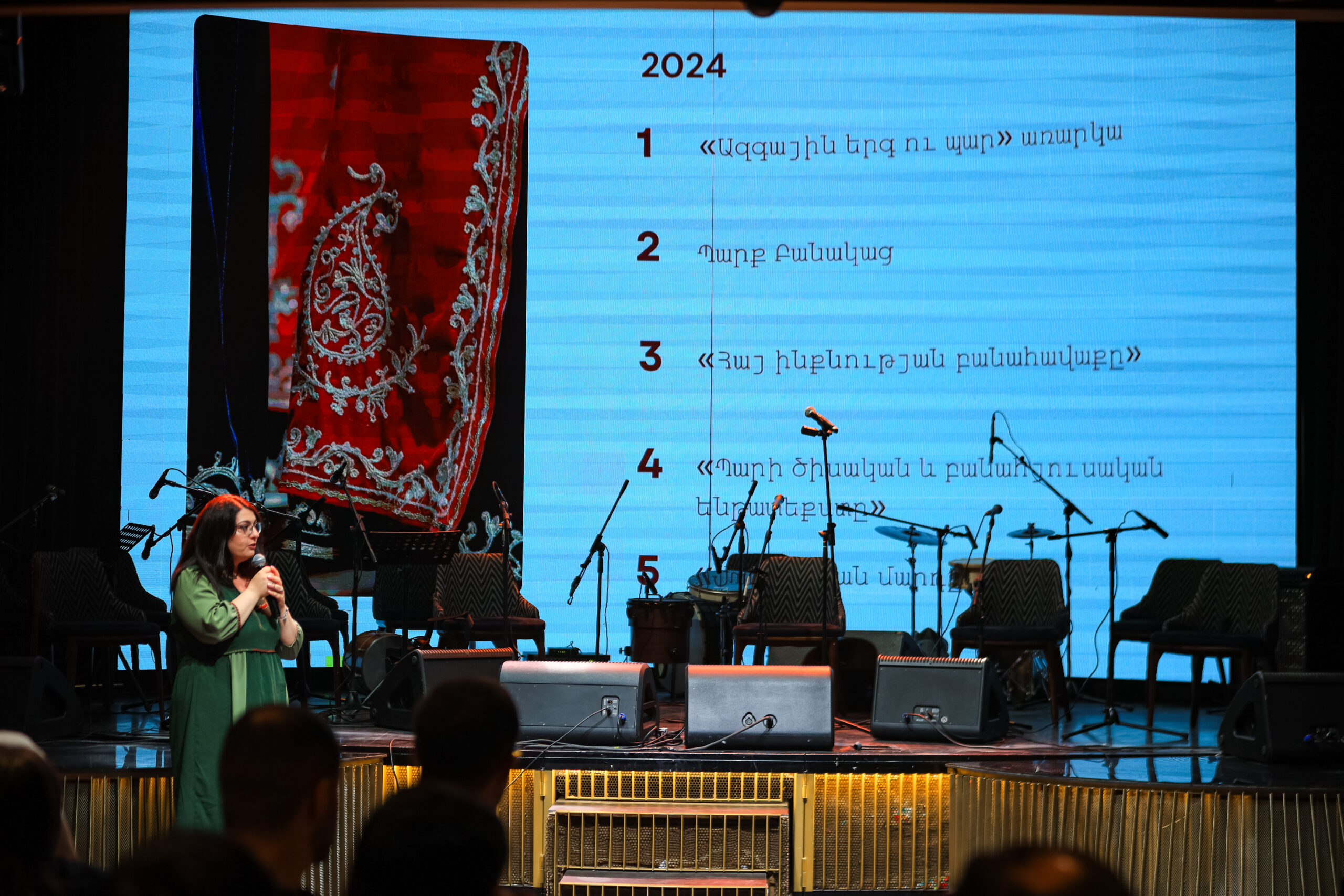
Starting from 2021, the center gained new momentum through its collaboration with the Ayb School, when the “Kakavagir” club was founded within the school’s project-based learning program and was joined by 11th–12th grade students. Under the leadership of Gagik Ginosyan, the club members studied Armenian traditional dances and applied S. Lisitsian’s “kinetography” system in practice. The result of this club’s activity was the publication of “Paragraph” in 2022 under G. Ginosyan’s guidance—a teaching manual of the simplified and improved version of “kinetography,” known as the “kakavagir” method—and the 2023 publication of the research collection “Dance-Based Identity,” which discusses the origins of traditional dances depending on ancient Armenian lifestyle patterns, regional and climatic conditions, using 10 dances from the Kars region as examples. The kakavagir-based notations of those dances are also included in the collection.


As a result of all this, the newly-created popular-science information not only revived and reintroduced into use S. Lisitsian’s valuable system—recording 10 Armenian traditional dance samples after a decades-long pause—but also, in line with the scientific center’s main philosophy, returned this knowledge to the people through two summary lectures titled “Dance Liturgy,” delivered in Yerevan (at the Naregatsi Art Institute) and in Gyumri (at the “October” cinema).

In addition, the Karin Scientific Center, in collaboration with the “National Song and Dance Academy” educational-cultural foundation, undertook the task of developing the school curriculum for the “National Song and Dance” subject introduced in Armenia’s public schools through the foundation’s efforts, updating the existing materials, and creating a methodological guide for the subject’s teachers.


These works were carried out by the members of the scientific center under the leadership of Gagik Ginosyan, co-founder of the educational-cultural foundation.

Slider images
Slider images

Long-term goals

The Karin Scientific Center for the Study and Research of Armenian Traditional Culture plans in the future to create a collection of Armenian traditional dances—a “Dance Library,” where all previously recorded dances, as well as famous dances ever included in the repertoire of various traditional groups, will be placed with all their variations, descriptions, explanations of dance steps, and accompanying kakavagir notation.


To regularly participate in events organized in the field, publish scientifically substantiated articles about various manifestations of Armenian traditional culture, organize conferences, gatherings, and discussions on different topics related to the field, support those interested both individually and in group settings to enhance awareness and professional literacy, as well as continue collection and research work both in Armenia and abroad, and so on.

Fundraising Evening for Teacher Training

Slider images
Slider images
Slider images
Slider images